Eurozone Inflation Turns Services-Led as Energy Plateaus
The headline blames energy. The data doesn’t.
Eurozone inflation rose to 3.2% in May, the highest reading since September 2023, and most coverage pinned the jump on the Middle East energy shock (Eurostat, confirmed release, 17 June 2026). But energy inflation didn’t move in May: it held flat at 10.8%. Food inflation actually eased, from 2.4% to 1.9%.
What pushed the headline up was services. Services inflation jumped from 3.0% to 3.5%, the biggest move of any component, and core inflation, which strips out energy and food, rose to 2.3%. Both sit above the European Central Bank’s 2% target.
Why the ECB moved anyway
That distinction is why the ECB raised rates 25 basis points on June 11, its first hike since 2023 (ECB press release, 11 June 2026). A central bank can look through an energy spike and expect it to fade. It can’t as easily look through services inflation that’s sticky and domestic.
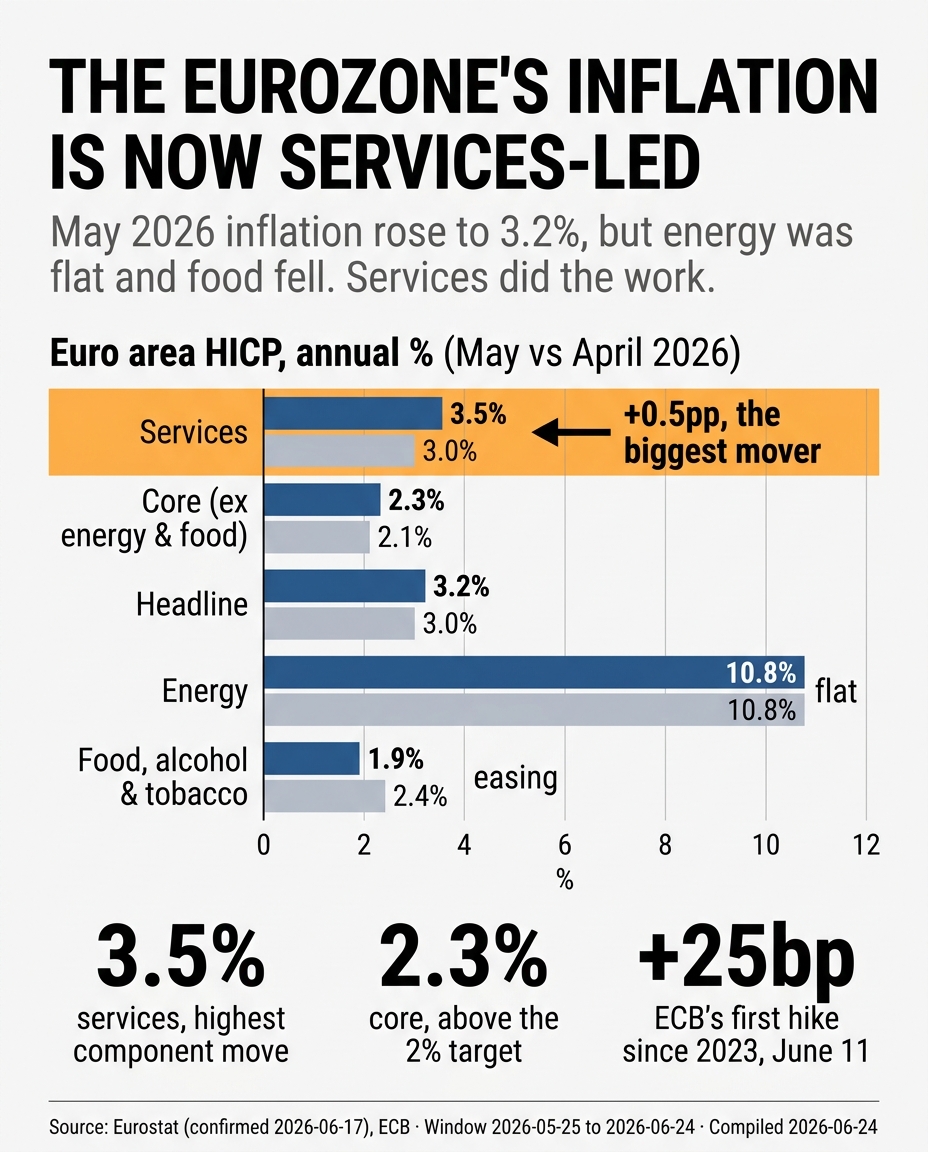
Energy is still elevated in level terms even though it’s flat month over month, so it keeps propping up the headline figure on its own.
One thing that complicates it: some secondary summaries put May core inflation at 2.5% and energy at 10.9%, against the confirmed Eurostat figures used here (2.3% and 10.8%). The flash-to-confirmed revision is minor and doesn’t change the story: services, not energy, is what’s driving this print.