The Reverse Yield Gap Comes Back
The safe asset now pays more than the risky one. The FTSE 100’s forecast dividend yield for 2026 is 3.40%, according to AJ Bell’s Dividend Dashboard (data as of 2026-06-12). The 10-year gilt closed at 5.04% on 30 July. That’s a 1.64 percentage point gap, and it runs in the government’s favor.
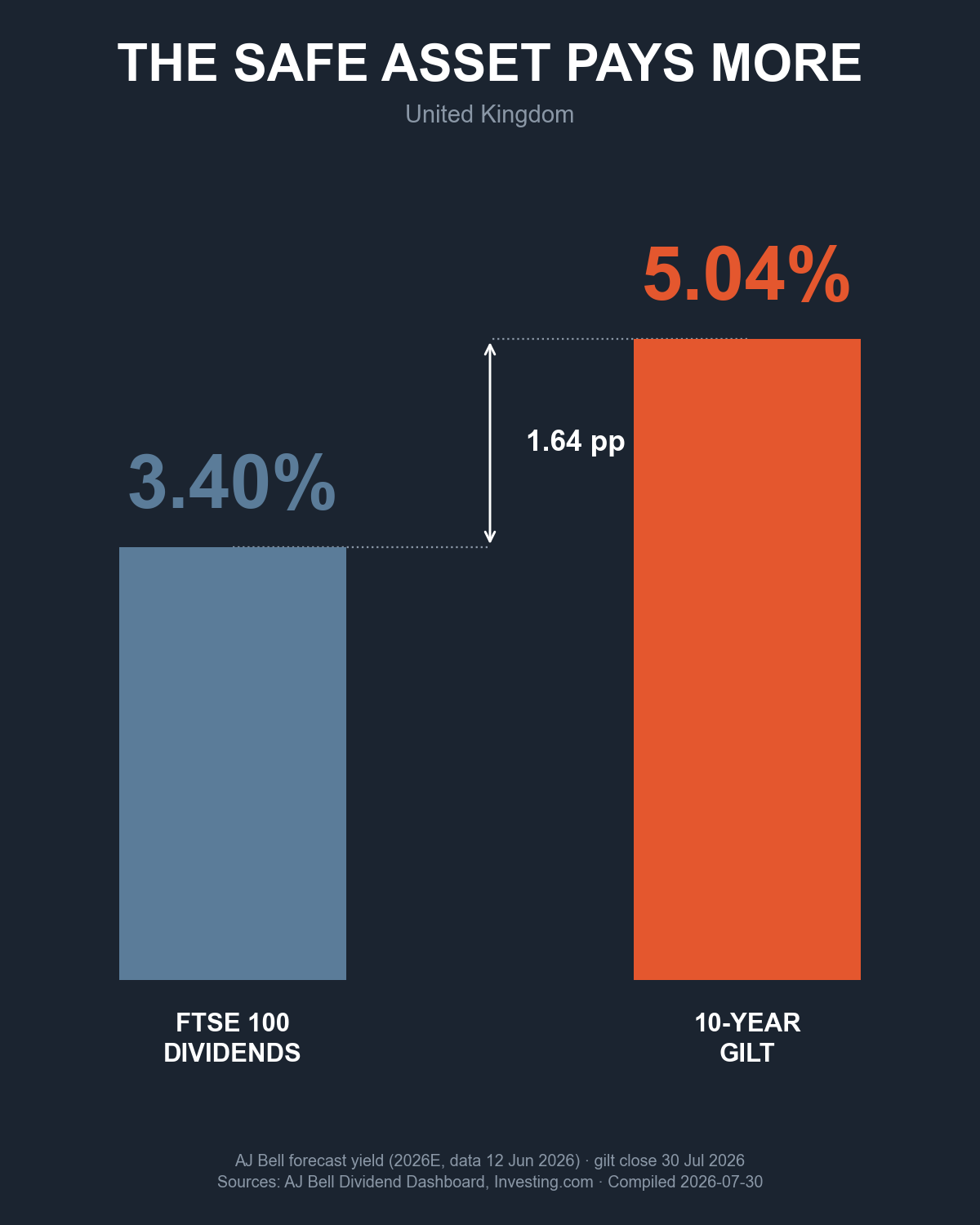
Buybacks don’t close the gap either. AJ Bell puts total FTSE 100 cash returns to shareholders, dividends plus buybacks, at 4.7% of market value: still short of the 5.04% gilt yield.
A milder version in Continental Europe
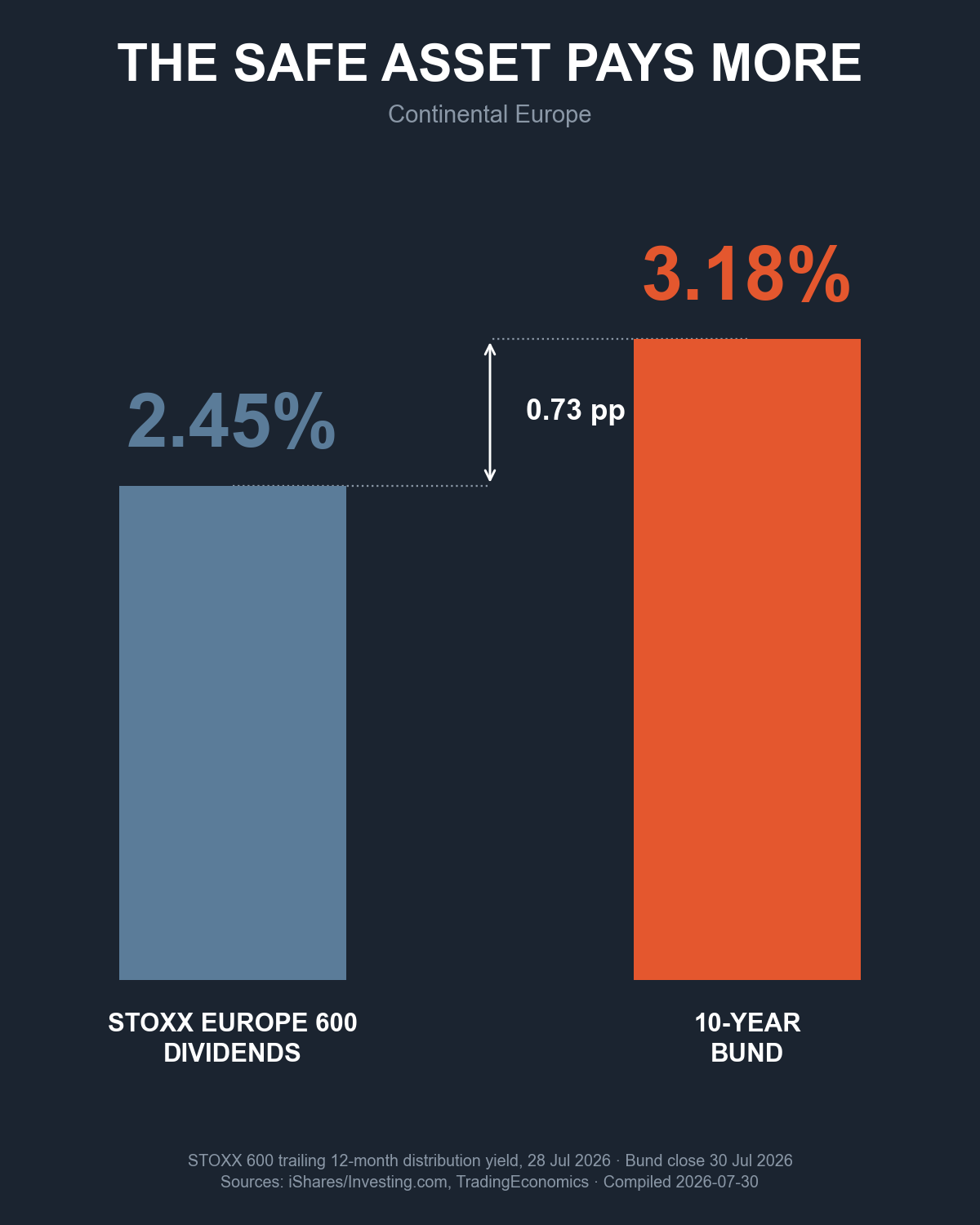
The same pattern shows up across the Channel, just smaller. The STOXX Europe 600’s trailing dividend yield is 2.45%. The 10-year German Bund sits at 3.18%, near a 15-year high. That’s a 0.73 percentage point gap, less than half the UK’s.
None of this is new. Equity dividend yields sat below gilt yields from 1959 to 2009: bonds were the safer asset, and investors accepted a lower yield for that safety. The 2008 financial crisis flipped the relationship, and for fifteen years income investors treated dividend stocks as the obvious bond substitute. That’s flipped back.
One thing worth holding onto: gilt coupons are fixed, dividends compound. The gap above describes the yield on offer today, not which asset pays more over ten years.
What this doesn’t show: the European comparison isn’t quite apples to apples. The STOXX 600’s 2.45% is a trailing 12-month distribution yield, not a forward-looking index yield like the UK’s 3.40% — the two gaps aren’t built the same way, even though they point in the same direction.